
Build vs Buy: Should You Build Your Own Sales Stack or Adopt a Sales Operating System?
At some point, most growing businesses with a real field operation face the same question. The tools on the market do not quite fit, so should we just build our own. It is a reasonable instinct, and for a small number of businesses it is the right call. For most, it is more expensive than it looks. Here is how to decide honestly.
The appeal of building
Building your own sales stack promises two things: control and fit. You get exactly the workflow you want, shaped to your territories, your commission rules, your reporting. Nothing you do not need, everything you do.
For a business with strong engineering capacity and a genuinely unusual operation, that can be worth it. The temptation is real and sometimes justified.
The true cost of building
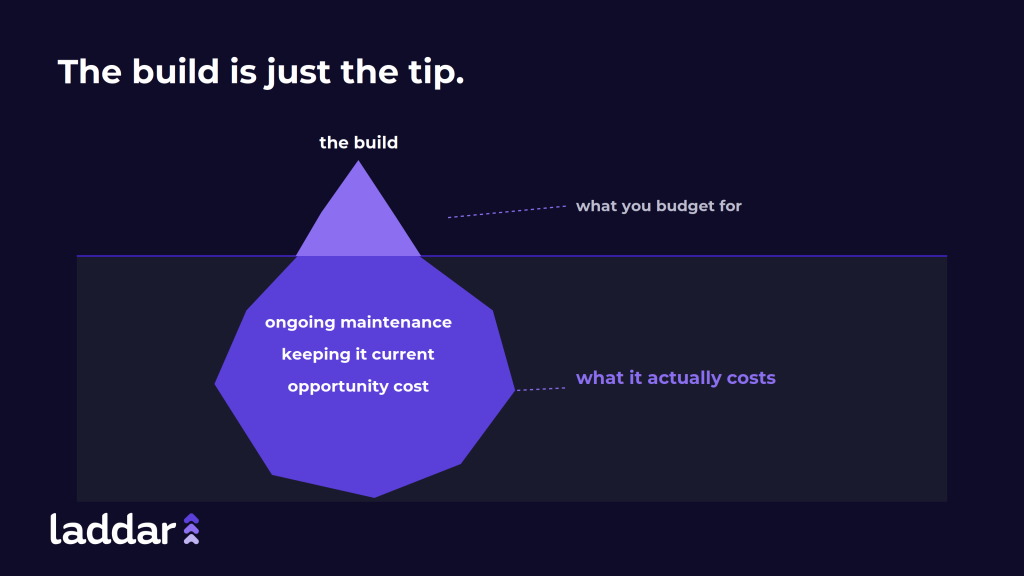
The trouble is that the build cost is the smallest part of the bill.
The first hidden cost is time. While your team builds, your competitors are selling on systems that already work. Every month spent building is a month not spent running a better operation.
The second is maintenance. Software is not built once. It has to be kept working: fixed, updated, adapted as your operation changes. A tool you build is a tool you now own forever, with an engineering team permanently attached to it.
The third, and the one most often missed, is keeping up with field reality. A sales operating system for African teams has to handle offline conditions, local billing, agent verification, and the specific ways field selling works. Getting that right once is hard. Keeping it right as conditions change is a full product effort, not a side project.
The fourth is opportunity cost. Engineering time spent rebuilding a category that already exists is engineering time not spent on the things only your business can build.
The case for buying
Adopting a sales operating system flips the maths. The offline capability, the agent verification, the incentive engine, the field capture, all of it already exists, tested at scale, maintained by someone else. You get the outcome without owning the machine that produces it.
The strongest version of this argument is proof at scale. Showmax managed 6,000 agents and onboarded 400,000 customers on Laddar. Reproducing the infrastructure behind numbers like that, and maintaining it, is a multi-year undertaking most businesses would never choose if they costed it honestly.
Buying also means you benefit from every improvement made for other customers, without paying to build it. Your system gets better while your team sells.
When building actually makes sense
To be fair, building can be right when a few things are all true: you have serious, spare engineering capacity, your operation is genuinely unlike anyone else’s, the sales stack is a core competitive advantage you must own, and you are prepared to fund it as a permanent product, not a project. If all of those hold, build.
For most businesses, most of those are not true. The operation is field sales, which is common, not unique; engineering capacity is scarce and needed elsewhere; and the stack is plumbing, not a differentiator.
A simple decision framework
Ask four questions. Is our sales operation genuinely unique, or a common shape done at our scale. Do we have spare engineering capacity we are willing to commit permanently. Is the sales stack itself a competitive advantage we must own. Can we match and maintain offline, verification and field capability better than a dedicated platform.
If you cannot answer yes to most of these, buying an operating system is almost certainly the better use of time and money. Laddar Field OS exists precisely so African sales teams do not have to build this from scratch.
FAQ
Is it cheaper to build or buy a sales system? For most businesses, buying is cheaper once you count the full cost of building: not just the initial build, but ongoing maintenance, keeping up with field and market realities, and the opportunity cost of the engineering time. Building looks cheaper only if you ignore what happens after launch.
When does building your own sales stack make sense? When you have spare engineering capacity you will commit permanently, your operation is genuinely unlike others, the stack is a competitive advantage you must own, and you can match and maintain capabilities like offline capture and agent verification yourself. Those conditions are rare.
What do I lose by buying instead of building? Some bespoke fit. What you gain is speed, proven reliability at scale, no maintenance burden, and every future improvement made for other customers. For a common operation like field sales, that trade usually favours buying.